Showing posts with label bone health. Show all posts

Tuesday, February 7, 2012

Fit In Fitness!


Health experts agree we need at least 60 minutes of physical activity a day for children and adults.

But you are busy! - We get it.

Did you know the 60 minutes does not have to all be at once? You get the same benefits of exercise even if you break up the 60 minutes into 4- 15 minute sessions, 6- 10 minute sessions or even 20- 5 minute sessions! 

Here are some tips for fitting in fitness into your day: 

·      Take the stairs instead of the elevator.
·      Take breaks and walk around at least 5 minutes for every hour of sitting.
·      Go to the bathroom on another floor.
·      Walk to see a colleague rather than phoning or emailing
·      Parking off site somewhere with a shuttle? Walk, don’t wait for the shuttle.
·      Walk or bike to errands that are a mile or less away,
·      Park your car further away. Leave close spots for the the elderly, disabled, and mothers with small children. Get in some extra steps while being considerate.
·      On the phone? Get up and walk around.
·      Trade out your desk chair for a stability ball,  you will engage your core, and improve posture.
·        Watching TV? Use commercial breaks to do squats, lunges, pushups, sit ups or jog in place.
·         Keep a light weight or resistance band on your desk or somewhere convenient, do a few moves for three minutes every hour.
·       Stuck in line? Do calf raises, or mini side lunges.
·       Waiting for a train or bus? Stuck on hold? Pace back and forth, do a little dance.
·         Do a wall sit, leg raise, or V step while brushing you teeth.
·      Meet up with friends for a walk or workout date instead of going out the eat.
·      Have a pooch? Take him/ her for a walk! Or offer to walk a neighbors dog – everyone will appreciate it.


How do you like to fit in fitness into your day? 

Thursday, May 5, 2011

The Vitamin D Debate

Vitamin D has been a hot topic the past few years.


Some of the roles Vitamin D plays include: 


  • Bone health = works with calcium to help form bone, and aids with calcium absorption 
  • Helps reduce inflammation = which is associated with various other disease states and health, namely health health 
  • Improves muscle strength and function
Diseases states Vitamin D is associated with: 

  • Cancer:  Specifically 
    • Prostate
    • Colorectal
    • Breast
    • Ovarian
    • Esophageal
    • Non-Hodgkin’s lymphoma 
    • Why Vitamin D is responsible for gene regulation- AKA when a cell replicated and divides. A cancer tumor is caused by a rapidly dividing cell that is not properly regulated. Adequate Vitamin D status helps to prevent these regulation issues. 
  • Multiple Sclerosis  (MS) 
    • MS is a genetic, autoimmune disease that affects the central nervous system. There are 6 genes associated with the development of this disorder. Research has shown that adequate Vitamin D  status can either turn on or off these genes. Unfortunately- this likely occurs in fetal development to early childhood. So, if MS runs in the family it is especially important to have adequate vitamin D status during pregnancy and early childhood. 
  • Diabetes and Insulin Resistance 
  • Heart Disease (Cardiovascular disease) 


Sources: 
The main source is the sun, however, in the winter the sun is too far away from the Earth, especially for people in the northern hemisphere, so even if it is sunny out we cannot make vitamin D. 


Food sources are limited and highly variable some natural sources include: fish and mushrooms - but it varies by species, if they are wild or farmed and when they are picked/ caught and storage. 


Some foods are fortified, namely dairy products, cereals, and some orange juice. 

How much we need?: 
This is the hotly debated topic.  The current Institute of Medicine (IOM) recommendation is 600 IU for adults, and 800 IU for geriatrics. This recommendation is solely based on bone health as there is still much debate over the other areas that Vitamin D. 

Dr. Hollick is a strong advocate of Vitamin D and generally suggests 1,000- 2,000 IU a day for adults and children. 

The Vitamin D Council  recommend 5,000 IU a day for adults. 

So whats the deal?? Through the research I have reviewed- a fair bet for most adults and children is about 1,000- 2,000 IU a day. If an individual is deficient - it can take much more (50,000 IU / once a week for 12 weeks on top of 1,000- 2,000 a day) in order to have an adequate vitamin D status. 

Due to all of the new research out there relating vitamin D to so many disease states, many doctors are now testing vitamin D levels (Of course, to add to the confusion - there is also some debate over what is an adequate blood level.) Many medical facilities state that less than 30 ng/dL is low, whereas others state less than 40 or 50 is low. So, if you do get your levels checked, and they are below any of those numbers you may want to consider supplementing a higher dose. 

Supplementation: 
I used to be somewhat opposed to supplements and believe that you can get all of your nutrients in through a good diet - but honestly- vitamin D is NOT in most foods- so supplementing is necessary. 

My personal recommendation is to take at least 1,000- 2,000 IU/ day. If you wish to do a calcium and vitamin D supplement, make sure it has at least 500 IU of vitamin D per a pill, and take 2 a day (at separate times of the day for the calcium to absorb). If you decide to take a multivitamin, try to get at least 800 IU in the vitamin- there are few multivitamins out there with a higher dosage than that, which is why I think the easiest is to just get a separate 1,000 IU vitamin D supplement.  

D2 versus D3??? It doesn't matter, unless you have kidney failure. D2 is inactive, D3 is active. If you are healthy and take the inactive version, your body will convert it. 


DO NOT TAKE OVER 10,000 IU/ day unless prescribed by a doctor!! It is a vitamin- and can become toxic in excess
You cannot get a toxic amount of vitamin D from the Sun. Your body will not synthesize it. 

Sunday, March 29, 2009

Got Milk?


As a follow up to my Adora Disk food review, I would like to take a moment to appreciate calcium supplements and calcium from whole food sources in general. 

I work on a research floor at MGH, and last year, for the fun of it I had a DEXA scan (Dual energy X-ray absorptiometry which is basically a machine that does a scan and gives you a picture of how dense your bone is along with your body fat composition.) Anywho, I was assessed to have Osteopenia- which is low bone density at any age. It is not as serious as Osteoporosis but it can escalate.
Basically the way bone growth works is you have until your late 20s to build up bone mass. You are constantly breaking down bone and building it back up, but you can still gain bone mass until then. Once you get to be about 30 years old, its all down hill from there. You can still maintain your bone mass, but you can not add to it. Which is why its so important to build up your bone mass before then, if you start off with low bone mass before you are 30 you are much more likely to develop osteoporosis.
I thought I had a pretty good diet and consumed enough calcium and workout enough, but apparently not. I figure if I had low bone density, there are tons of people out there who don’t know they have osteopenia. The problem with DEXA scans, or other ways to have your bone density checked is that they are really expensive, and not covered by insurance, except sometimes after the age of 50- which makes NO SENSE! Why bother to even check when its so late in the game?
So I am on a mission to get everyone I know (preferably before the age of 30) to build up as much bone mass as possible! How do we do this:
Increase Calcium intake: You need at least 1000-1200 mg/ day (depending on age and gender).
Ways to increase your calcium intake include eating more dairy products such as low fat milk, yogurt, and cheese . If you are lactose intolerant (like me…) or a vegan/ vegetarian, there are still plenty of other modified and fortified products such as lactiad, soy milk, some orange juice, cereals etc. Check out the 3 a day campaign for more tips: http://www.nationaldairycouncil.org/nationaldairycouncil/health/ThreeADay
Calcium is in some vegetables (check it out: http://www.citracal.com/Calcium/Foods/Vegetables.aspx) but the calcium that is in these is MUCH less bioavailable- meaning that your body can’t use them as well. So if you are a vegan, vegetarian or just don’t like dairy please don’t rely on these. I am all about the veggies, but your bones need more than this.
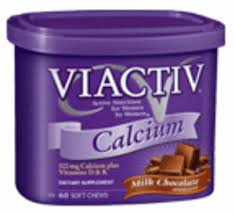
If you do not think you can eat enough calcium in your diet, supplements are another way to go (and probably wouldn’t hurt anyway.) they have them in pill form, and chewable form, and as I reviewed: chocolate form :)

Vitamin D is also vital for bone health. So make sure you intake it with calcium or throughout day.
On top of calcium and vitamin D, weight bearing exercise is key to building bone. Partaking in “pounding” activity, in which you body is bearing a lot of weight is great for building bone (not always for your joints, but there’s never a win-win situation is there? ) So exercises like jogging are great for your legs and hips to build bone, and performing weight lifting, or other weight bearing exercises your upper body are vital.